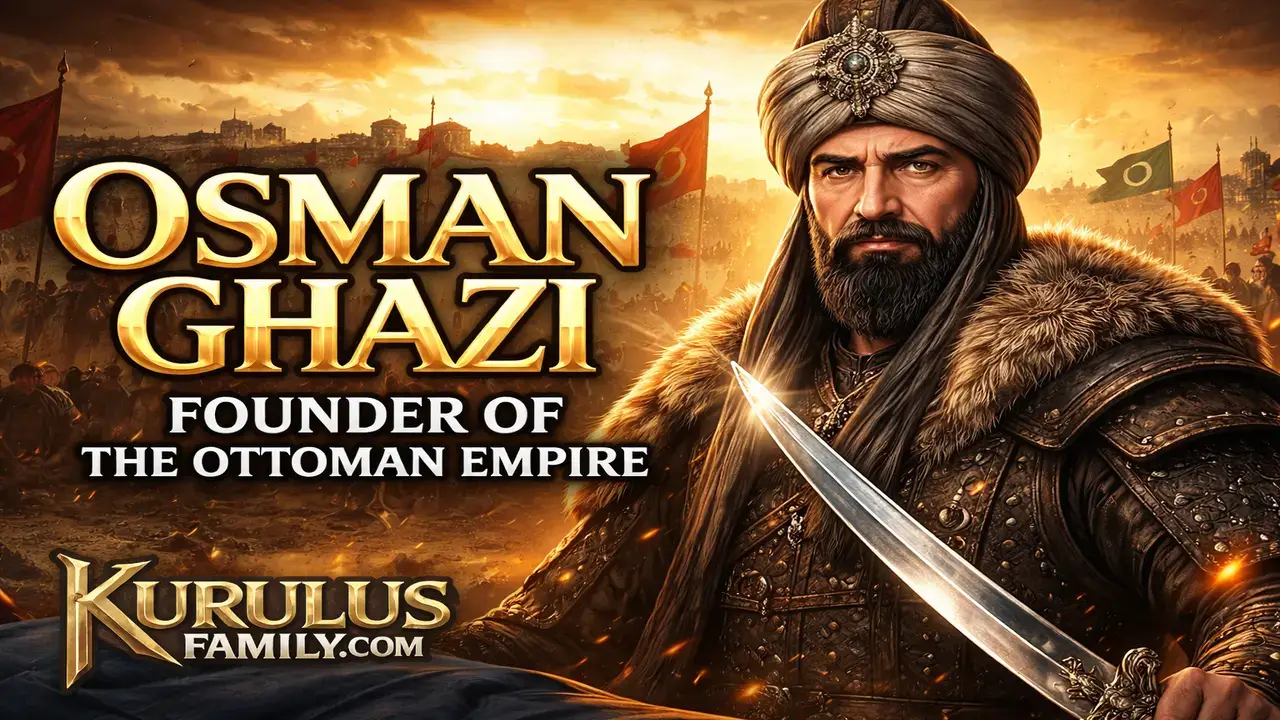
Osman Ghazi was the founder of the Ottoman Empire around 1299. Born to Ertuğrul Ghazi, he transformed a small frontier tribe in Anatolia into a growing state through military strategy, fair governance, and long-term vision.
Quick Facts: Osman Ghazi
- 📅 Born: c. 1254–1258 in Söğüt, Anatolia
- 👑 Reign: c. 1299–1323/1324
- 🏛️ Founded: Ottoman Empire
- ⚔️ Known for: Expansion against the Byzantine Empire
- 👨👦 Father: Ertuğrul Ghazi
- 👨👦 Successor: Orhan Ghazi
The Birth of a World Power
The rise of Osman marks one of the most important turning points in world history. From a small tribal base in Anatolia, he laid the foundation of the Ottoman Empire, which would eventually span three continents.
What makes his story remarkable is not just conquest—but vision. While many leaders fought for survival, Osman Ghazi built a system designed to last for centuries.
Early Life and Background
Birth and Strategic Location
Osman was born between 1254 and 1258 in Söğüt, a frontier settlement in northwestern Anatolia (modern-day Turkey). This location, close to the weakening Byzantine Empire, exposed him to both conflict and opportunity from a young age.
Family Influence
As the son of Ertuğrul Ghazi, leader of the Kayı tribe, Osman grew up in a disciplined, warrior-based society. His father’s leadership under the Seljuk Sultanate of Rum gave him early experience in diplomacy and frontier politics.
Rise to Power
Leadership After Ertuğrul Ghazi
After the death of Ertuğrul Ghazi around 1280, Osman Ghazi assumed leadership of the tribe. Unlike other tribal chiefs, he focused on expansion rather than survival.
Formation of the Ottoman State
Around 1299, he established independence from the declining Seljuk authority. While this date is symbolic, it represents the gradual emergence of the Ottoman state under his leadership.
Military Strategy: How Osman Ghazi Expanded His Power
1. Ghazi Warfare Model
Osman attracted Ghazis—warriors motivated by both faith and opportunity. This gave him a dedicated and expanding fighting force.
2. Hit-and-Run Tactics
Instead of large-scale battles, he used fast raids and surprise attacks, targeting weak points in Byzantine defenses.
3. Fortress Isolation Strategy
Rather than attacking major cities directly, Osman captured smaller forts first. This weakened enemy supply lines and made larger cities vulnerable.
4. Psychological Warfare
His reputation for justice led many local communities to surrender peacefully, reducing resistance and strengthening control.
Economic and Administrative Foundations
Building More Than an Army
What truly set Osman apart was his ability to build a functioning state, not just win battles.
Key Policies
- Fair Taxation:
Non-Muslim populations paid taxes but retained land and protection. - Trade Route Control:
His territories controlled key Anatolian trade routes, boosting economic activity. - Land Distribution System:
Warriors were granted land in exchange for service, creating loyalty. - Religious Tolerance:
Different communities lived under relatively stable conditions.
👉 This balance between military expansion and economic stability transformed a small tribe into a sustainable state.
The Dream of Osman: Symbolism and Debate
According to Ottoman tradition, Osman Ghazi dreamed of a great tree growing from his chest and covering the world. Sheikh Edebali interpreted this as a sign that his descendants would rule a vast empire.
However, modern historians believe this story may have been added later to strengthen the legitimacy of the Ottoman dynasty.
Historical Debates About Osman Ghazi
Understanding Osman Ghazi requires separating history from legend.
Key Debates
- Birth Date: Estimated between 1254–1258
- Death Date: Likely 1323–1324
- Foundation Year (1299): Symbolic rather than exact
- Dream Narrative: Possibly a later addition
- Tribal Strength: Likely smaller than described in chronicles
Historian Colin Imber notes that early Ottoman histories often blended fact with political storytelling.
Primary Sources and Historical Records
Knowledge about Osman Ghazi comes from later Ottoman historians, including:
- Aşıkpaşazade
- Neşri
- Tevarih-i Al-i Osman (Chronicles of the House of Osman)
These sources were written after his death, which explains why some details contain legendary elements.
Archaeological Evidence
Physical traces of Osman Ghazi’s legacy still exist:
- 🏛️ His tomb in Bursa
- 🏰 Early Ottoman architectural remains in Anatolia
- 📜 Coins and inscriptions from early Ottoman rule
These confirm the transition from tribal leadership to organized governance.
The Bursa Campaign and Final Years
Although Osman Ghazi initiated the campaign, the city of Bursa was captured in 1326, approximately 2–3 years after his death.
This victory became a defining moment, as Bursa later served as the first capital of the Ottoman Empire under Orhan Ghazi.
Timeline of Osman Ghazi’s Life
- 1254–1258 – Birth in Söğüt
- 1280 – Becomes tribal leader
- 1299 – Establishes Ottoman authority
- 1300–1320 – Expands into Byzantine lands
- 1323–1324 – Death of Osman Ghazi
- 1326 – Capture of Bursa
Osman Ghazi vs Other Empire Founders
| Founder | Empire | Founded | Strategy |
|---|---|---|---|
| Osman Ghazi | Ottoman Empire | 1299 | Gradual expansion |
| Genghis Khan | Mongol Empire | 1206 | Rapid conquest |
| Augustus Caesar | Roman Empire | 27 BC | Political reform |
👉 Osman Ghazi’s strength was sustainability, not speed.
Why Osman Ghazi Is Important
- Founded one of the longest-lasting empires
- Created systems of governance and stability
- Unified diverse populations
- Influenced global history for over 600 years
People Also Ask (FAQs)
Who was Osman Ghazi?
Osman Ghazi was the founder of the Ottoman Empire and ruled during the late 13th and early 14th centuries.
How did Osman Ghazi start the Ottoman Empire?
He expanded his tribe through strategic warfare, alliances, and governance, gradually forming an independent state around 1299.
What was Osman Ghazi’s famous dream?
He dreamed of a tree growing from his chest covering the world, interpreted as a sign of future empire. Historians see it as symbolic rather than factual.
Why is Osman Ghazi important?
He laid the foundation of the Ottoman Empire, shaping global politics, culture, and history for centuries.